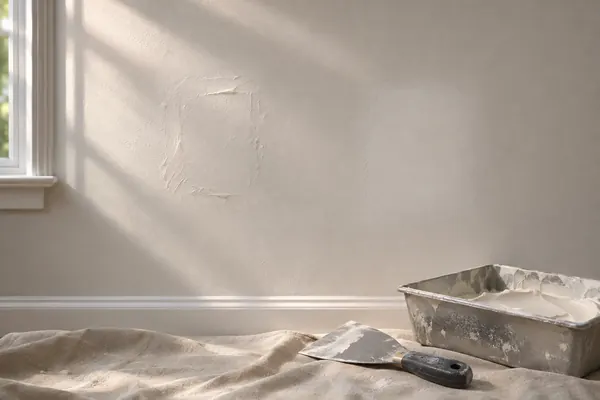
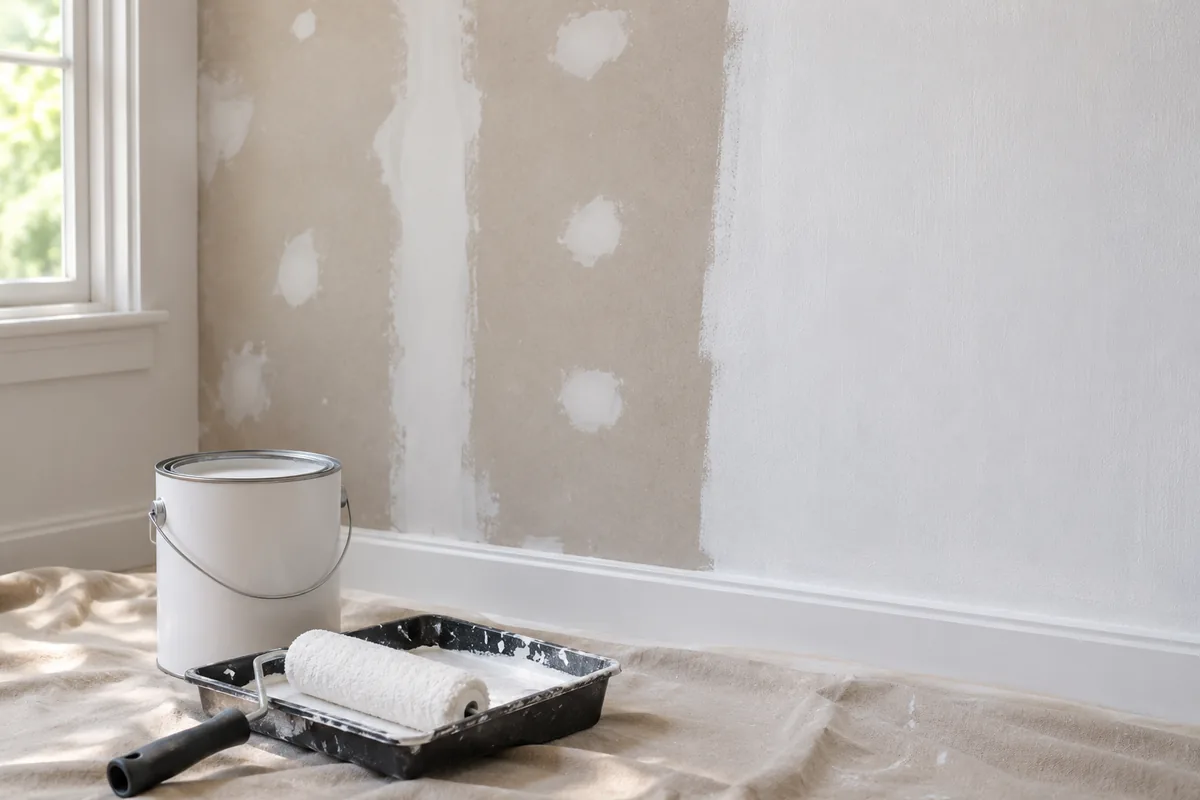
“Paint and primer” does not mean that every surface can skip separate priming. Bare or repaired areas, difficult existing finishes and stains may need a specific primer. Choose the system according to the surface and the product instructions.
Identify what is underneath
Tell your painter whether the wall is new drywall, previously painted, patched, glossy or stained. These are different starting points. A sound, compatible existing finish may be treated differently from a porous repair or an old coating with uncertain adhesion. The preparation decision should come before choosing how many containers to buy.
Give the primer a specific job
A primer might be selected to seal an absorbent area, improve adhesion or address a stain. Those functions are not interchangeable. A general-purpose product is not automatically the right answer for every problem. Ask which issue the proposed primer is meant to solve and check that it is suitable for both the substrate and the intended topcoat.
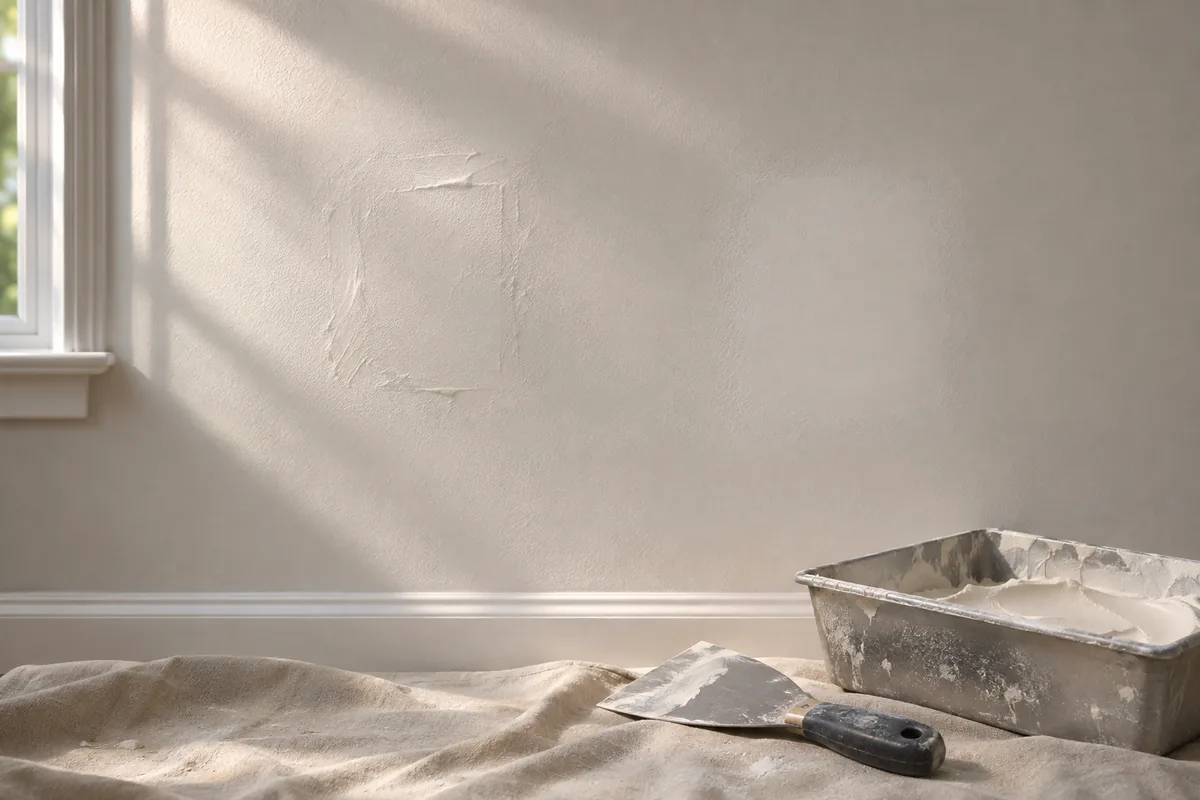
Do not ask colour coats to hide a preparation problem
Adding more finish paint can improve colour coverage, but it is not a substitute for repairing loose material or resolving moisture. If a patch shows as a different sheen, or an old finish is lifting, pause and diagnose the cause. A successful surface is not just the correct colour; it also needs to remain attached and reasonably uniform.
Confirm the complete system
For a quote, record the preparation, primer where required and finish coats as a sequence. Ask whether priming is limited to repairs or extends across the whole surface. The right answer depends on the job. Follow the chosen products’ technical instructions for compatibility, application conditions and recoat intervals rather than mixing generic timing advice from different brands.
Your next-step checklist
- Identify the existing surface and repair areas.
- Choose primer for a specific purpose.
- Record primer and topcoat products together.
Further reading
Manufacturer instructions and public guidance to help you check the details for your project.
Published by We The Painters Inc., an Oakville-based painting company serving the GTA. These are general planning guides; the condition of your surfaces and the selected product instructions determine the work your project needs.